Mini Giraffe Machine Embroidery
A Tiny Safari That Actually Works on Real Fabric
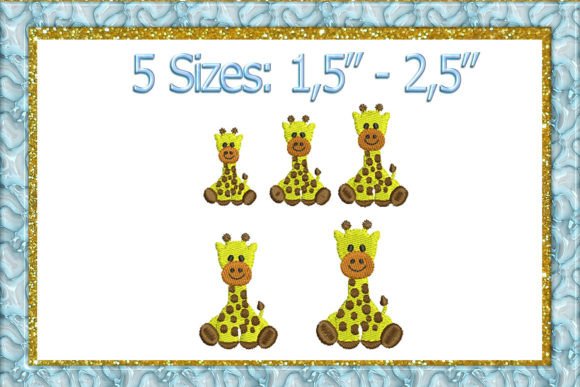
Let’s be honest: “mini” animal embroidery designs often look charming in the preview—but fall apart under needle and thread. I tested Mini Giraffe Machine Embroidery on a soft cotton baby onesie, a linen tea towel, and a structured twill tote bag—and it held up with quiet confidence. It doesn’t shout. It doesn’t overcomplicate. It just lands: friendly, balanced, and unmistakably giraffe-like at even the smallest size (1.69” x 2.53”). This isn’t a novelty silhouette—it’s a functional, stitch-smart machine embroidery design built for real-world use.
First Impressions: Sweet, Not Saccharine
The shape is compact but expressive—the neck curves gently, ears perk without stiffness, and the face avoids cartoon exaggeration. There’s subtle contouring in the fill stitch areas that suggests gentle dimension without relying on dense satin stitch. At 5598 stitches, it strikes a practical balance: enough detail to read clearly on a onesie chest or pocket, light enough to avoid puckering on lightweight fabrics. As a designer who regularly sources digital embroidery files for boutique clients, I appreciate how this avoids the “over-stitched cuteness” trap—no floating limbs, no fragile legs, no awkward negative space. It feels intentional, not automated.
Where It Shines (and Where It Needs Care)
I used Mini Giraffe Machine Embroidery to create personalized baby gifts—a set of matching burp cloths and a muslin swaddle—and customers consistently commented on how “delicate but clear” the stitching looked. That’s the sweet spot: ideal for baby embroidery, nursery decor, and soft apparel where subtlety reads as care.
- Sweatshirt embroidery? Yes—with medium-weight tear-away stabilizer and reduced top tension. The stitch density holds well on fleece-backed cotton, especially at the mid-size (2.0”–2.3”).
- Embroidered patch? Absolutely. It cleaned up beautifully on twill backing, and the clean outer edge makes it easy to trim and fuse.
- Tote bag design? Perfect for the front pocket or lower corner—small enough to complement, not dominate.
- Caps or curved surfaces? Proceed with caution. The smallest size works best here, and I recommend testing on scrap first—some minor distortion appears near the ear tips on rigid caps unless you use a foam stabilizer.
Fabric & Function: What You’ll Want to Watch
This design behaves predictably on stable, medium-weave fabrics—cotton poplin, brushed twill, midweight linen. But it does ask for attention on trickier substrates:
- Thin or sheer fabric: Use cut-away stabilizer underneath—fill stitch areas can show shadowing otherwise.
- Stretchy knits: Hoop with light spray adhesive and baste first. The compact shape helps, but any stretch can pull the neck curve slightly.
- Dark fabric: Test thread contrast carefully. Light tan or ivory thread reads softer than white—more cohesive for baby items.
- Frequent-wash items (like bibs or towels): Confirm your thread is polyester or high-quality rayon. The stitch count is modest, but low-density fill areas benefit from durable thread.
Why It Builds Trust—Not Just Cuteness
As an Etsy seller and small shop product developer, I’ve watched how tiny details affect perceived value. A poorly digitized mini animal looks rushed; a well-executed one like Mini Giraffe Machine Embroidery signals intentionality. Customers notice when the eyes are aligned, when the stitch direction follows the neck’s flow, when there’s no stray jump stitch near the hooping margin. That consistency builds customer trust—especially for personalized gifts and handmade products where buyers pay a premium for craftsmanship.
It also supports brand cohesion. Whether you’re embroidering for a safari-themed baby boutique or adding a signature accent to your line of organic cotton kitchen towels, this design doesn’t fight your aesthetic—it quietly reinforces it. No need to over-edit or re-digitize. It arrives ready to represent your standards.
Designer Notes You’ll Actually Use
Before sending Mini Giraffe Machine Embroidery to your machine—or listing it as part of your craft business assets—here’s what I do every time:
- Run a test on scrap fabric *with your exact stabilizer and thread*. Stitch density looks different in software than on cloth.
- Check the smallest size (1.69”) for legibility on dark backgrounds—sometimes subtle fill transitions disappear without contrast.
- Compare black-and-white mockups. Does the shape still read as giraffe? (It does—clean profile, distinct head/neck ratio.)
- Inspect corners and curves in your embroidery software: no tiny isolated stitches, no overlapping satin columns—just smooth transitions.
- Confirm licensing terms before selling finished items or bundling the file. The description mentions “Baby Animals” and “kids Animal safari”—but commercial use rights must be verified directly with the source.
Final Thought: A Reliable Detail, Not a Gimmick
I keep Mini Giraffe Machine Embroidery in my go-to folder for last-minute client requests: a custom apron for a pediatrician’s office, a set of holiday tea towels for a local gift shop, a trio of embroidered patches for a children’s clothing line. It’s never the star—but it’s always the detail that makes the piece feel complete. It doesn’t try to be bold or trendy. It’s simply a well-made, thoughtful embroidery project asset—one that supports your work instead of demanding extra fixes. For craft business owners, Etsy sellers, and designers building real products—not just pretty previews—that’s the highest compliment I can give.